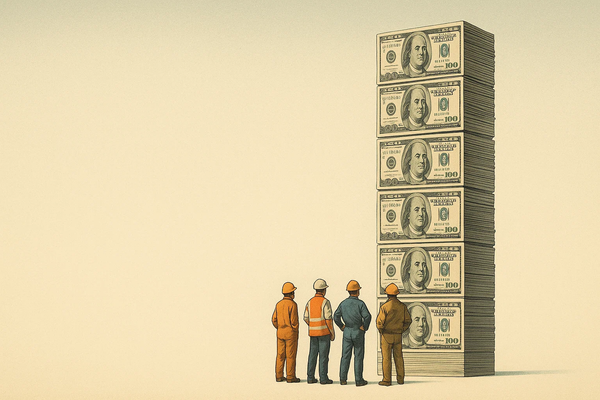
The Quiet Rise of U.S. Manufacturing


Manufacturing rarely grabs the spotlight. Yet behind the noise of tech valuations and policy debates, something steadier is happening on factory floors across America. The sector is rebuilding itself piece by piece — not through hype, but through investment, supply chain shifts, and a renewed focus on resilience.
Recent Developments
September’s numbers from the Federal Reserve and S&P Global show that industrial production is trudging ahead despite fits and starts. Manufacturing output trended slightly down in September after modest gains over the summer; swings in aerospace and autos muted what might otherwise have been a more robust reading. Nevertheless, underlying strength is visible in advanced sectors: semiconductor factories, electric vehicle assembly lines, and energy infrastructure projects are expanding capacity and investment. According to the Semiconductor Industry Association, more than $500 billion in private sector investments are slated to triple domestic chip production by 2032—a generational pivot after decades of offshoring.
Electric vehicles are another bright spot. Automotive manufacturing, which was rocked by supply shortages and labor disputes in 2021–2023, has stabilized and is now adding capacity for the next wave of EV platforms and battery supply chains. Meanwhile, construction spending on energy infrastructure—solar, wind, grid upgrades—continues to benefit from federal incentives and persistently high demand. These segments, though uneven in short-term output, are forming the backbone of a revitalized industrial economy for the next decade.
Labor market data, however, shows that manufacturing is still wrestling with headwinds. While unemployment remains low on a historic basis, manufacturing employment nudged down this month as new projects compete for a finite pool of skilled workers. “The upturn in output is real, but companies are finding it difficult to hire the skilled labor needed to keep up with growth—especially in advanced sectors,” notes Joshua Miles, a business development lead in the construction sector.
Supply Chains & Reshoring
The wave of factory announcements in 2025 is about more than investment—it's about strategy. A clear lesson from years of tariff battles, pandemic disruptions, and global instability is the need for more secure, nimble supply chains. The CHIPS Act and Inflation Reduction Act (IRA) are driving a new phase of industrial diversification away from China, with more companies shifting production to U.S. sites and supply partners in North America.
GE Appliances, which announced a $3 billion U.S. expansion plan this fall, is emblematic of a shift: “This award is proof that when you invest in American workers and factories, you strengthen supply chains and fuel the resurgence of U.S. manufacturing,” said Bill Good, Vice President of Supply Chain at GE Appliances. Federal incentives are accelerating this reorganization, but companies are also responding to persistent trade friction, cost volatility, and the strategic need for closer control of intellectual property and logistics.
Corporate surveys indicate this is not just a blip. Over 90% of North American firms have reshored some portion of their production or sourcing in the last five years, and the 2025 figures show U.S. imports from Mexico now outpace those from China for the first time since the 1990s. The “China+1” strategy is giving way to “North America-First”—heightening resilience, creating high-skilled jobs, and providing more autonomy over key technologies. A record share of U.S. companies in China are accelerating plans to relocate operations, with nearly 30% considering or initiating moves this year.
Market Implications
A stronger manufacturing sector brings ripples both regional and national. For local economies—the Midwest, Southeast, and Mountain states—recent investment means job creation, revitalized communities, and a pipeline of next-generation industrial skills. Supply chain security is a direct boost to corporate earnings, especially for firms exposed to global shocks or requiring advanced technology inputs.
Manufacturing’s steadiness is distinct from the whiplash of tech. While technology stocks and digital startups often ride waves of hype and volatility, industrial earnings and output tend to mirror tangible demand and long-term investment cycles. The newest plants are capital-intensive, but are backed by years of incentives and steady, if understated, consumer and business demand. As one S&P Global analyst puts it, “Business confidence has improved to a three-month high...Inventories of finished goods grew at the quickest rate in over a year. Despite uncertain outlook, hiring to ease capacity constraints is trending up; the sector’s steadiness is its greatest strength.”
It’s not all smooth sailing. U.S. manufacturers are navigating a labor crunch that shows no sign of easing. Skilled trades, engineering, and advanced production roles are especially hard to fill, and wage pressures continue to mount in competitive regions. Material costs and interest rates remain elevated, biting into margins and slowing some projects. Meanwhile, regulatory hurdles and permitting delays put the brakes on ambitious infrastructure and clean energy investments.
Geopolitical risk—whether from China or unpredictable tariff policy—remains a structural threat. As President Trump’s trade measures continue to evolve, both costs and uncertainty have increased. Large IRA and CHIPS projects are sometimes bogged down by regulatory requirements, with only a fraction fully operational.
A Clearer Brew Ahead
As mornings grow cooler and the headlines shift to the next drama, the quiet rise of manufacturing is shaping American economic destiny one project, one plant, one new hire at a time. The story is not flashy or easy, but it’s rooted in endurance and adaptability. In the words of Bill Good at GE Appliances, “When you invest in American factories, you fuel a resurgence that lifts entire communities.” The quiet hum of machinery signals a different kind of progress—the kind that endures after the coffee cools and the headlines move on.
For readers seeking both clarity and steadiness, U.S. manufacturing offers a lesson: sometimes, the most important changes happen just out of sight, quietly building the foundation on which future prosperity rests.
“Clarity before the coffee cools.”
Warren Blake
Editor-in-Chief, Smart Trade Insights