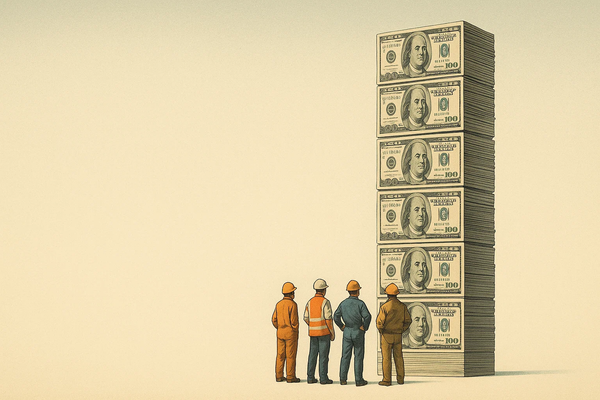
Amazon, Apple, and the Weight of Big Tech


Big Tech continues to carry markets in September 2025, with giants like Apple and Amazon shaping investor sentiment and market dynamics amid a shifting technology landscape. The Nasdaq and S&P 500 remain heavily influenced by these titans, underscoring their growing role in the economy and the weight they carry for broad-market investors.
Apple After the New iPhone Launch
Apple’s latest iPhone launch is being widely discussed for its integration of advanced artificial intelligence features. This “AI iPhone” story is more than hype—it carries implications for the company’s upgrade cycles and revenue streams. Apple CEO Tim Cook recently emphasized the investment in AI, highlighting future product advancements that build on this momentum.
AI features may not force every user to upgrade right away, but they deepen the value of the device and tie customers more tightly to Apple’s ecosystem. Services revenue also benefits, as AI-driven customization and new functionalities boost subscriptions and data ecosystem lock-in. This dynamic strengthens Apple's recurring revenue base, critical in an industry where hardware sales can be cyclical.
Suppliers such as TSMC, Qualcomm, and Broadcom stand to gain from this cycle. TSMC’s chip production capacity remains pivotal, while Qualcomm’s AI-enhanced modem technologies and Broadcom’s connectivity components find strong demand embedded in these new devices. This supply chain activity reflects Apple’s continued influence beyond its direct consumer base and into semiconductor and component markets.
Amazon’s Role in Market Growth
Amazon remains a dominant force, led by the growth of Amazon Web Services (AWS), its cloud computing segment. AWS posted revenue growth of about 19% year-over-year, reaching roughly $28.8 billion in recent quarters. Despite strong growth, AWS’s expansion is noted to be “uneven,” influenced by enterprise adoption cycles and supply constraints like chip shortages and power availability.
Amazon is investing heavily in AI infrastructure, seen in over $100 billion capital expenditures planned for 2025, aimed at competing with Microsoft Azure and Google Cloud. AWS’s operating income surged nearly 50% year-over-year, asserting its role as Amazon’s profit engine and impacting the Nasdaq index given Amazon’s heavy market capitalization.
New AI initiatives from Amazon, including partnerships with AI firms like Anthropic, reflect a strategic push to embed generative AI into cloud services. However, this comes with challenges such as industry competition and the complex dynamics of AI workload deployments. Amazon’s cloud segment continues to influence corporate IT spending broadly and thus shapes market perceptions of tech sector resilience.
Market Concentration and Implications
The Nasdaq and S&P 500 have seen increasing concentration, with a handful of Big Tech stocks accounting for a significant portion of market capitalization. This concentration creates a dual-edged environment: while it provides stability and leadership to indices, it also raises risks related to dependence on a few companies’ performance.
It’s a double-edged sword — these giants can lift the whole market, but they can just as quickly shake it if they stumble. Their resilience through technological innovation, global scale, and strong balance sheets supports market momentum in uncertain macroeconomic times. Yet excessive reliance could amplify volatility if regulatory, competitive, or technological disruptions impact any key player, leading to outsized market swings.
The question for investors today is not simply whether these giants will continue to grow but how their outsized market weight may affect overall market dynamics.
Will Big Tech continue to prop up the market, or will the weight become a drag as investor focus broadens?
Reflecting on these dynamics, it is clear the story of Big Tech in 2025 is about both transformation and tension.
Big Tech’s triumphs may steady the market, but they can just as easily stir fresh volatility. For investors, the task is to keep perspective — and find clarity while the coffee is still warm.
“Clarity before the coffee cools.”
Warren Blake
Editor-in-Chief, Smart Trade Insights